
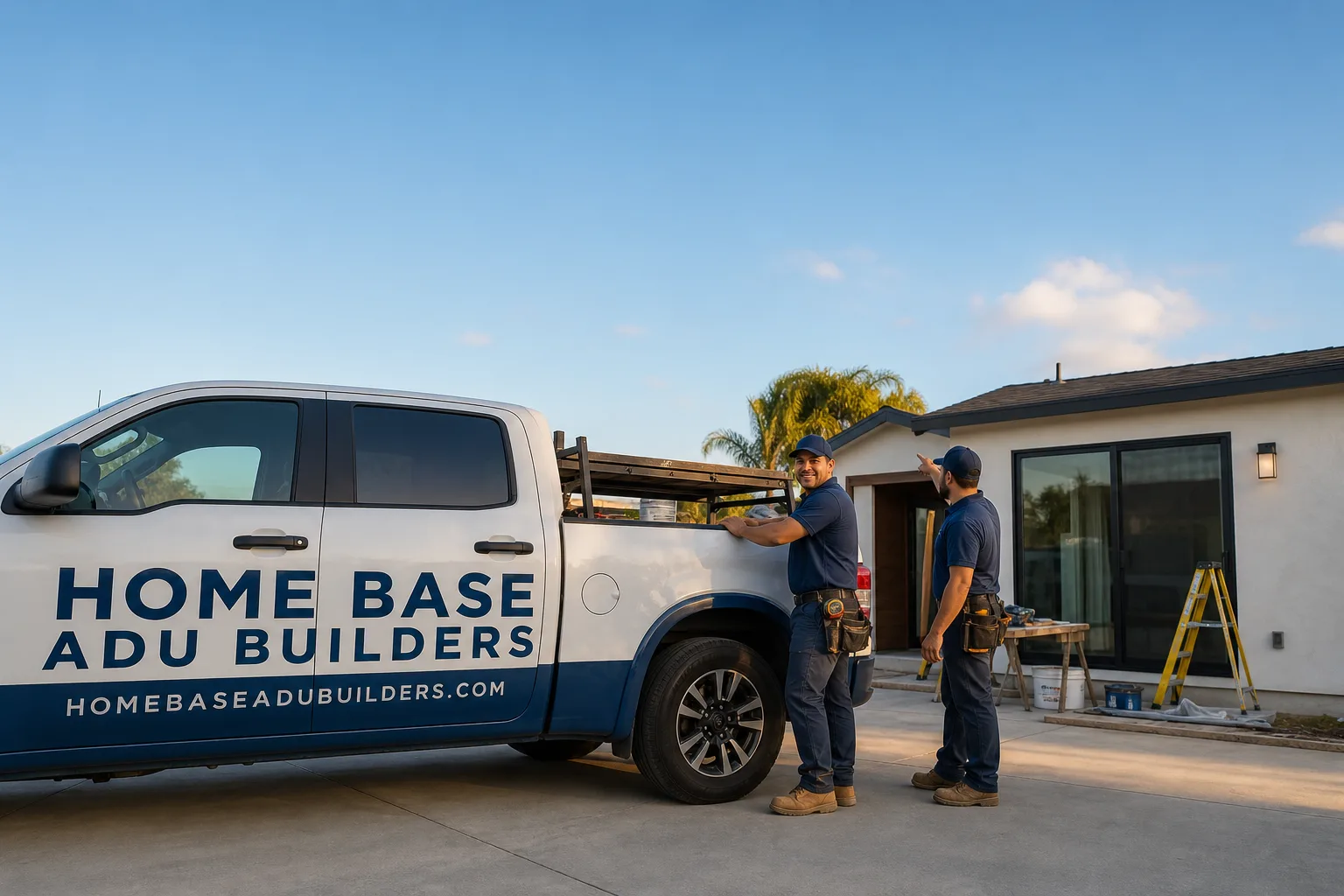
Fast, Reliable ADU Builders Across Garden Grove
Adding an accessory dwelling unit to your Garden Grove property usually costs between $180,000 and $450,000 depending on whether you go with a Tuff Shed conversion, a prefab from a manufacturer like Abodu, or a full custom build. The biggest variable in Garden Grove isn’t the brand you choose. It’s whether your lot can physically accommodate a second structure given the setback and access constraints on your specific street. We’re Home Base ADU Builders, and we’ve worked the planning counter at Garden Grove City Hall enough times to know which questions they’ll ask before you’ve paid for drawings. Call (866) 403-9834 for a free estimate, and we’ll walk your property with you before you commit to a floor plan.
Why Home Base ADU Builders Is Garden Grove’s Preferred ADU Builders Company
We’re not a general contractor dabbling in ADUs on the side. Home Base ADU Builders focuses exclusively on residential dwelling spaces: ADU Builders, kitchens, and bathrooms. That focus matters in Garden Grove because the city’s post-war housing stock throws up specific problems on nearly every job: original 1960s electrical panels that can’t carry a second dwelling, slab-on-grade plumbing that resists trenching, and garage lines that sit so close to the rear property line that the planning counter treats every inch as a negotiation.
Our owner, Neil Bradshaw, has built across the full spectrum here, from budget Tuff Shed conversions to architect-designed Dvele and Plant Prefab units. We know that Garden Grove homeowners researching ADUs are often comparing brands online and feeling overwhelmed. Our job is to cut through that: we match you to the right ADU, not the one we have in stock. We use James Hardie fiber-cement exteriors because they hold up to inland Orange County sun without warping or fading the way cheaper cladding does.
Garden Grove clients work with us because we understand the city’s planning process at a granular level. We’ve pulled units through the fire-separation review on existing garage lines, we’ve coordinated with the city’s building counter on alley access, and we’ve handled party-wall notices for neighbors before trenching ever starts. That local knowledge is why homeowners in ZIPs 92840 through 92843 call us back.
Backyard ADU in Garden Grove
A Backyard ADU in Garden Grove is typically a detached unit built in the rear yard of a 1950s to 1970s ranch or mid-century tract home, and it’s the most common ADU type we handle in this city. In the dense post-war tracts around ZIPs 92843 and 92844, the challenge is almost never the unit itself. It’s the fact that the original garage already occupies the buildable envelope near the property line, so the ADU has to be pushed into whatever space remains. Garden Grove homeowners need a builder who reads the site before the floor plan, not after. A detached backyard unit here generally runs $220,000 to $450,000 for a finished, permitted build with James Hardie exterior cladding, depending on foundation work, utility trenching, and access complications.
Corner Lot and Garage Line Placement
Many Garden Grove corner lots have garages that sit flush against the rear or side property line. That’s not a design preference, it’s a planning-counter ruling waiting to happen. The city treats any structure on that line as a fire-separation problem, which means your unit’s layout gets decided by setbacks and alley access before you ever pick a floor plan. We pull the city’s requirements first, then plan the ADU around what’s actually buildable.
Rear Yard Access and Staging
Getting materials to a rear-yard site in Garden Grove often means dealing with a narrow side yard, a shared driveway, or an alley that can’t fit a concrete truck. We’ve done projects where the only way to reach the build site was through a rear alley with a mini-excavator, staging James Hardie panels in the front yard under a tarp and moving them back as needed. This isn’t about making things harder. It’s about quoting honestly so you’re not eating surprise pumper truck charges later.
ADU Construction in Garden Grove
ADU Construction in Garden Grove means building a permitted, code-compliant second dwelling on a residential lot that was never designed for one. It’s the full scope of work: demolition of any existing structure in the way, foundation or slab pour, framing, electrical, plumbing, insulation, drywall, exterior cladding, roofing, and final inspection. For Garden Grove homeowners, the hidden costs usually hide in the original house, not the ADU. A 1960s ranch with its original electrical panel and sewer lateral will need upgrades before the city signs off on a second unit. That’s where a builder who understands the existing housing stock saves you from a change order halfway through. Detached ADU construction here typically runs $250,000 to $450,000. Attached conversions or garage conversions start lower, around $180,000, but every site is different.
Electrical Panel and Sewer Lateral Upgrades
Garden Grove’s housing stock is old enough that the original 100-amp panels and clay sewer laterals are common. Adding an ADU means running new circuits and often replacing the panel outright, and the city will require the sewer lateral to be inspected and often replaced before it connects a second dwelling. We handle this under one contract with our kitchen and bathroom remodeling team, so you’re not juggling three subcontractors when the panel needs to move.
Foundation and Drainage in Clay Soil
Garden Grove sits on clay-heavy soils that expand and contract with seasonal moisture. A detached ADU needs proper grading and a foundation designed for that movement, especially with inland Orange County’s pattern of dry summers and rare but intense winter rain. If your rear yard slopes toward the house or the alley, drainage has to be resolved before the slab goes down. We’ve never poured a foundation in this city that didn’t need some form of regrading or a drainage swale first.
Trusted Brands We Service in Garden Grove
We work hands-on with six leading prefab ADU manufacturers, and we service all of them here in Garden Grove: Abodu, Cover, Dvele, Mighty Buildings, Boxabl, and Plant Prefab. For clients on a tighter budget, we also build Tuff Shed conversions as an entry-level path to a permitted rental unit. Because we work across manufacturers, our recommendations are driven by your lot, your budget, and your timeline, not by whichever brand pays the best referral margin. We stock local parts and materials for Garden Grove jobs, including James Hardie fiber-cement panels for exterior finishing, so we’re not waiting on out-of-state shipments when weather or scheduling shifts.
Common ADU Builders Problems We See in Garden Grove Homes
- Garage line setbacks killed the first plan. In the dense post-war tracts around 92843 and 92844, rear detached ADUs often have to sit on the exact property line the original garage occupies. The city’s fire-separation review on that line decides whether your project moves forward, and we’ve watched plenty of other builders submit drawings that get rejected for this exact reason.
- Access was assumed, not confirmed. A full-size concrete truck will not fit down most Garden Grove side yards or rear alleys. If your quote doesn’t account for a line pump or hand-mixed pour in a constrained site, you’re going to eat that cost mid-project.
- The neighbor wasn’t notified before trenching. We’ve seen routine detached-ADU jobs turn into complaint-driven stop-work orders because a builder skipped the party-wall notice on a shared wall. The city takes neighbor complaints seriously in tight post-war tracts, and a stop-work order costs you days, not hours.
- The original panel and sewer lateral were ignored. Garden Grove’s 1950s and 1960s homes almost never have the electrical capacity or sewer condition for a second dwelling without upgrades. A builder who quotes only the ADU and not the panel or lateral is setting you up for a change order.
Pricing for ADU Builders in Garden Grove, CA
A permitted Backyard ADU in Garden Grove runs roughly $250,000 to $450,000 as a detached unit, while a Tuff Shed conversion or garage conversion can start around $180,000. The two biggest cost drivers in this city are the foundation and site access. If your rear yard is reachable only through a narrow side yard or shared alley, expect to pay for a line pump or manual material handling. If your lot sits on the 92843/92844 garage-line dynamic, expect additional engineering and fire-separation requirements to add $8,000 to $15,000 to the permit phase. A larger custom build with Dvele or Plant Prefab panels can run $400,000 and up. We give written, line-item quotes after walking your property, and estimates are free. Call (866) 403-9834 to schedule yours.
We Also Serve Cities Near Garden Grove
Beyond our work throughout Garden Grove, we regularly build ADUs in Stanton, Westminster, Midway City, and Cypress. Home Base ADU Builders is based in Fountain Valley and our crew moves between these Orange County cities daily, so scheduling a site visit near Garden Grove doesn’t require a long lead time. If your property is in one of these neighboring cities, we bring the same planning-counter knowledge and same James Hardie materials.
Serving Garden Grove, CA — Our Local Coverage Area
We’re based in the Garden Grove area and know this community well. Use the map below to see our service coverage — if you’re nearby, we can almost certainly help.
FAQs About ADU Builders in Garden Grove
Your quote changes dramatically based on whether a concrete truck can reach the rear yard directly or whether we have to use a mini-excavator through a shared alley, stage materials in the front yard, or hand-carry panels around a house with no side access. If the only path to your build site is a five-foot side yard that can’t fit equipment, that labor cost gets baked into the estimate. It’s one reason we walk the property before quoting. Call (866) 403-9834 and we’ll come out and price it honestly.
You can usually build, but the city will run a fire-separation review on that existing garage line first, and the rear setback ruling at the planning counter will decide your buildable envelope before any floor plan does. We’ve pulled detached ADUs through this exact scenario in the 92843 and 92844 area, including alley-access work behind a corner lot where we brought equipment through the rear rather than crossing a shared driveway. The key is submitting drawings that respect the property line and fire code from day one. We handle that for you as part of the build.
Yes. If your ADU shares a wall or sits within a few feet of a neighbor’s property line, a party-wall notice is standard practice in Garden Grove’s dense post-war tracts, and skipping it is how routine jobs turn into stop-work complaints. We coordinate the notice and have the conversation with the neighbor before trenching starts. It protects your schedule and keeps the city from getting involved.
It means you’ll likely need a panel upgrade and a sewer lateral inspection or replacement before the city approves a second dwelling. Most original 1960s Garden Grove panels are 100-amp and can’t carry an ADU’s circuits. Old clay sewer laterals frequently fail inspection when the city connects the ADU. We handle both under the same contract, coordinating with our kitchen and bathroom remodeling team so you’re not dealing with separate electrical and plumbing subs. Call (866) 403-9834 for a site walk and we’ll identify these items before you sign anything.
Garden Grove enforces standard Orange County construction hours, typically 7:00 AM to 6:00 PM on weekdays with some Saturday work allowed, and the city is more likely to respond to noise complaints in dense post-war tracts where homes sit close together. We run our Garden Grove sites with a clean staging plan so materials aren’t spilling into the street or shared driveways, and we keep trenching and demolition within permitted hours. It keeps the neighbors neutral, which keeps your project moving. Call (866) 403-9834 to talk about scheduling on your street.
Written by Neil Bradshaw, Owner at Home Base ADU Builders, serving Garden Grove and surrounding Orange County cities.