
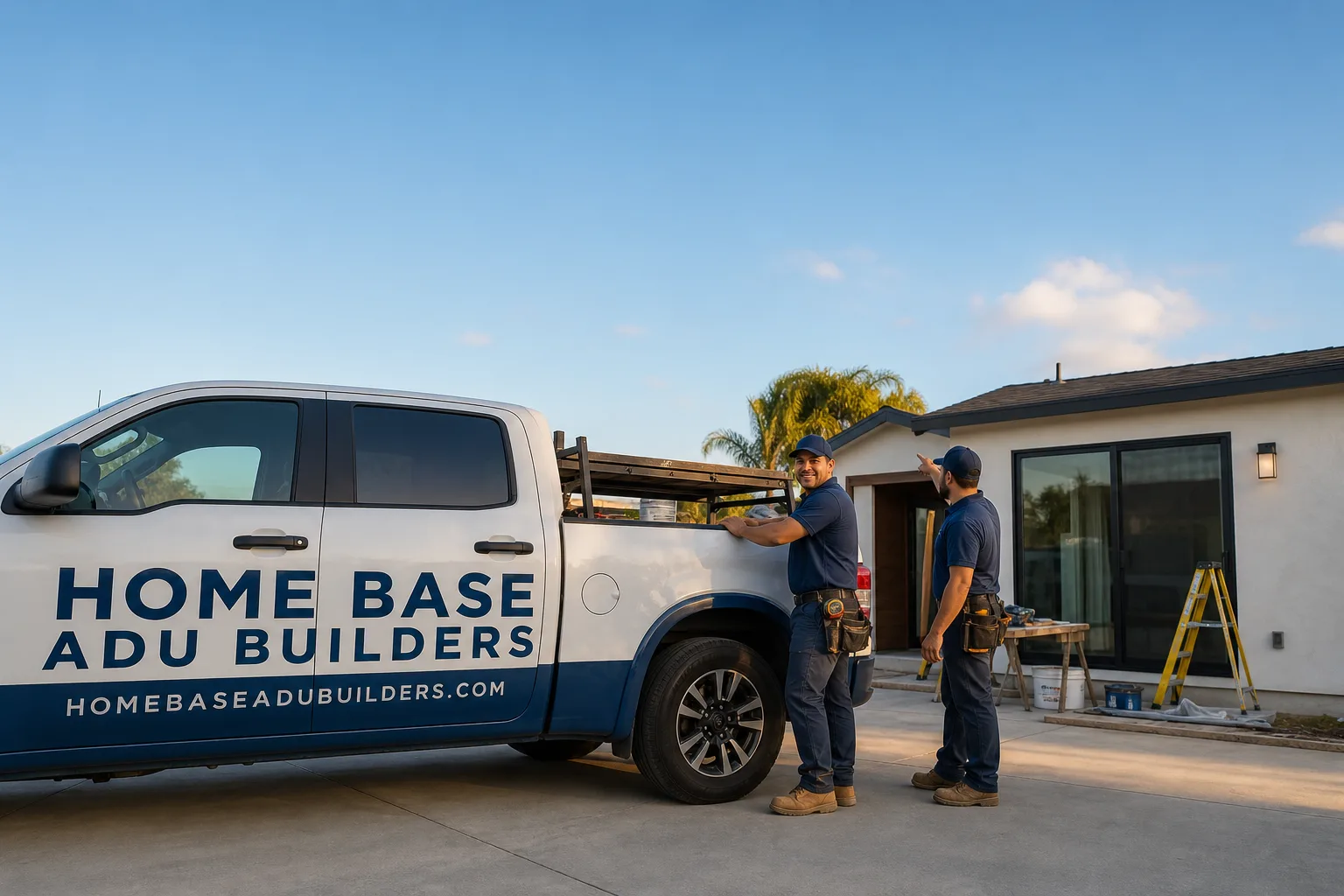
Fast, Reliable ADU Builders Across Moreno Valley
If you’re researching ADU builders in Moreno Valley, you’re likely trying to figure out what’s actually possible on your lot, what the city will let you build, and what it’ll cost. The short answer: a detached ADU in Moreno Valley typically runs $180,000 to $320,000 for a one-bedroom unit, and a garage conversion usually lands between $90,000 and $150,000, depending on the existing foundation, electrical, and sewer conditions. We’re Home Base ADU Builders, led by Neil Bradshaw, and we work across the full spectrum: Tuff Shed-based conversions on the budget end, Plant Prefab and Abodu for mid-range engineered units, and Dvele for architect-designed premium builds. Call (866) 403-9834 for a free estimate. We’ll walk your specific lot through Moreno Valley’s local ordinance before you spend a dollar.
Why Home Base ADU Builders Is Moreno Valley’s Preferred ADU Builders Company
Most Moreno Valley homeowners own stucco-on-wood-frame tract homes built between the 1980s and early 2000s on lots that are genuinely generous by Southern California standards. That’s a real advantage for detached ADUs. But it also means the city’s own rules on lot coverage, setbacks, and height become the deciding factor, and those rules aren’t identical to what Rancho Cucamonga or Riverside enforce. We’ve worked properties in Sunnymead Ranch, Towngate, and Rancho Belago, and we’ve learned which questions the City of Moreno Valley planning counter actually asks.
Our approach is brand-agnostic. That matters here because a detached unit on a flat 92555 lot in Towngate faces different engineering questions than a hillside parcel in Rancho Belago. We don’t push one manufacturer or one build method. We match the ADU to the lot, the budget, and the city’s specific review path. From Tuff Shed conversions to Dvele prefabs, we’ve built across the full spectrum, and we incorporate James Hardie fiber-cement exteriors as our standard rather than a paid upgrade. One contractor from foundation to finished kitchen, which means you’re not coordinating a general contractor, a prefab installer, and a separate finish crew.
ADU Contractor in Moreno Valley
An ADU Contractor in Moreno Valley handles the full build: site work, foundation or slab, utility connections, framing, exterior cladding, roofing, and interior finish, all while managing the permit and inspection schedule the city requires. You need one when the project goes beyond a kit delivery and becomes a real construction job with local code implications. Most detached units here run $180 to $320 per square foot depending on finish level, site access, and whether the lot triggers slope or drainage review. A garage conversion typically lands between $90,000 and $150,000 unless we’re also upgrading the main panel or rerouting sewer lines.
Wind-Load Engineering and Structural Detailing
Moreno Valley sits in the inland Santa Ana wind corridor, and the city’s building department applies a higher basic wind speed than coastal jurisdictions. That changes the connections: rafter-to-wall ties, hold-downs, and anchor bolt spacing all get checked against the local wind map, not a generic California standard. We specify these details in the plan set before permit submittal so the inspection doesn’t become a surprise.
Permit Management and Utility Coordination
The City of Moreno Valley runs its own ADU ordinance, not just state law. We handle the submittal, respond to plan-check comments, and coordinate with Southern California Edison and Moreno Valley’s sewer district where needed. Older core-area homes near Sunnymead often have dated panels or shared sewer laterals, and those get flagged during the building permit review. We address them before they stall the build.
ADU Design in Moreno Valley
ADU Design in Moreno Valley means engineering the unit for the specific lot conditions here: the big suburban parcel, a hot dry climate, Santa Ana wind exposure, and the city’s local ordinance on setbacks, lot coverage, and height. The design phase is where most costly mistakes happen, because a plan pulled from a coastal or out-of-state catalog wasn’t drawn for Moreno Valley’s wind map or the city’s parking requirements. Our design work includes a full site analysis, the architectural plan set for submittal, structural engineering stamped for the local wind speed, and interior layout planning that works for a rental or multigenerational use.
Climate-Specific Siting and Materials
Intense inland sun means a detached unit here needs its own cooling load calculation. We orient windows to limit west-facing afternoon heat gain, spec roof insulation beyond the bare minimum, and use James Hardie fiber-cement siding that handles the dry heat without the movement you get from cheaper vinyl on a south-facing wall. Shade trees or a covered entry make a real difference on a 92554 lot with full sun exposure.
Ordinance-Driven Layout Decisions
Setback and lot-coverage limits in Moreno Valley shape the unit’s footprint more than the floor plan does. On a typical Rancho Belago tract lot, the side-yard setback for a detached unit can push the design toward a narrower, deeper layout than you’d see in a Riverside catalog. We work within those constraints from the first sketch, so the design that goes to plan check is the one that gets approved.
Trusted Brands We Service in Moreno Valley
We work hands-on with six leading prefab ADU manufacturers, and for Moreno Valley homeowners the ones that matter most are usually Abodu, Plant Prefab, and Tuff Shed. Abodu handles mid-range one- and two-bedroom units with a fast California-specific approval path. Plant Prefab offers more custom panelized designs when the lot is irregular. Tuff Shed conversions are the budget entry point, and we finish them as full dwelling units, not just a shell. We stock the typical parts these builds need for Moreno Valley inspections: hurricane ties, hold-downs, and the James Hardie trim and siding products that meet the local weathering and fire-resistance expectations. Here’s how these brands actually compare for your situation, and we’ll walk you through it on site.
Common ADU Builders Problems We See in Moreno Valley Homes
- Wind-load ratings below local code. Plans sourced from coastal or out-of-state catalogs often carry a lower wind-speed design than Moreno Valley’s building department requires, and the first structural inspection flags the missing connections. We re-engineer the plan set locally before submittal.
- Skipping the local ordinance review. State law doesn’t preempt everything. A detached unit that busts Moreno Valley’s specific lot-coverage or setback limits gets denied, and a redesign at plan check costs weeks and thousands.
- Electrical panels at capacity. Many 1980s and 1990s tract homes in Sunnymead Ranch and Towngate still run 100-amp panels, and adding an ADU often triggers a panel upgrade the original bid didn’t include.
- Older sewer laterals near Sunnymead. Core-area homes closer to the 92553 corridor sometimes sit on transitioned septic-to-sewer lines with older laterals, and a garage conversion can surface sewer-capacity issues during the permit review.
Pricing for ADU Builders in Moreno Valley, CA
We Also Serve Cities Near Moreno Valley
Our ADU Builders team works throughout the Inland Empire, and we regularly build in March Air Force Base, Woodcrest, Colton, and Loma Linda. If your property is in one of those areas, or you’re comparing options across Moreno Valley and a neighboring city, we can evaluate your lot against the right local ordinance and give you an honest read on what’s buildable.
Serving Moreno Valley, CA — Our Local Coverage Area
We’re based in the Moreno Valley area and know this community well. Use the map below to see our service coverage — if you’re nearby, we can almost certainly help.
FAQs About ADU Builders in Moreno Valley
What wind-load rating does a detached ADU need in Moreno Valley, and how do I verify it?
A detached ADU in Moreno Valley must meet the basic wind speed in the city’s current building code, which reflects the inland Santa Ana wind corridor rather than coastal assumptions. You verify it with a stamped structural engineering package that lists the design wind speed and the specific connections, anchor bolts, and hold-downs required for it. In Rancho Belago, we built a detached ADU using James Hardie siding and a hip roof engineered for the local wind speed, but the first inspection flagged missing hurricane ties on the rafter-to-wall connections – an omission common in plans pulled from coastal catalogs. We added the ties, documented the wind-load compliance with stamped engineering, and the homeowner later used that paperwork to keep their insurance rider unchanged after the unit was added. Call (866) 403-9834 and we’ll review your specific property against the current code.
Does Moreno Valley’s local ADU ordinance change setback or lot-coverage rules for a detached unit on a big tract lot?
It does. Moreno Valley layers its own lot-coverage, setback, height, and parking standards on top of state ADU law, so the rear- or side-yard setback for a detached unit on a Towngate or Sunnymead Ranch tract lot is governed by the city’s municipal code, not just the state default. A plan that clears state minimums can still fail local review. This is why we check lot coverage and the rear-yard block-wall perimeter against the city’s current ordinance before we draw the design. Call (866) 403-9834 for a free estimate and we’ll run your lot through the local standards.
How does documented wind-load compliance affect my homeowners insurance after adding an ADU?
Documented wind-load and structural compliance gives your insurer proof that the addition was built to the local standard, and having the stamped engineering at final inspection can prevent a premium increase or a rider adjustment when the unit is added to the policy. If the paperwork isn’t there, the insurer may require a re-inspection or retrofitting before they’ll write the updated coverage. We keep the full engineering and inspection record organized for you. Call (866) 403-9834 and we’ll explain what your build will include in the documentation package.
I’m in the Rancho Belago hills – does slope and drainage review add steps to my ADU permit?
Yes, the hillside tracts in the eastern Rancho Belago area trigger slope and drainage review at the city level, which flat-lot neighbors in Towngate never see. The review looks at grading, retaining, and how runoff from the new roof and hardscape leaves your property, and it adds time to the permit path plus engineering work on the foundation and drainage design. We’ve done enough hillside builds here that the review doesn’t catch us, but it’s a real step you should budget for. Call (866) 403-9834 and ask us to walk your specific hillside lot.
For a garage conversion near Sunnymead, what electrical and sewer-capacity issues should I expect?
Expect a panel upgrade if the home still runs a 100-amp service, and expect questions about the sewer lateral if the property is on one of the older transitioned septic-to-sewer lines common in the 92553 corridor. Both get flagged during the building permit review, not after, and a conversion that skips them fails final inspection. We scope the electrical and sewer conditions before we bid so the number you get is the number you pay. Call (866) 403-9834 and we’ll check your specific address’s service size and sewer connection.
Get Your Moreno Valley ADU Estimate Today
The fastest way to know what’s buildable on your Moreno Valley lot is to talk to someone who’s pulled permits here, not someone reading from a state-level guide. We’ll review your property against the city’s current ordinance, check the wind-load and utility issues that matter for your specific neighborhood, and give you a written, line-item quote. Call (866) 403-9834 to schedule your free estimate.
Written by Neil Bradshaw, Owner at Home Base ADU Builders, serving Moreno Valley and the surrounding Inland Empire cities.